



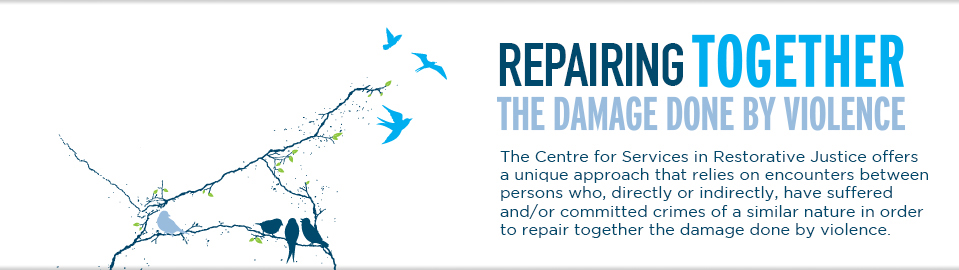
Drawing on its experience with restorative justice meetings and based on the interests expressed by our participants, the CSJR has created restorative justice workshops.
Although innovative, these workshops remain true to our approach, which encourages the participation of community members as social witnesses who foster openness within their communities.
These workshops allow people who have experienced or committed acts of violence—whether criminalized or not—to share and process their experiences in a safe and respectful setting, to explore the consequences of those experiences, and to explore possible paths toward healing, whether internal, relational, or focused on others.
For even when the past cannot be changed, it is still possible to transform the way we choose to move forward.
Addiction workshop: Where life paths intersect

Addictions—whether related to substances, behaviors, or emotional relationships—all have one thing in common: they turn lives upside down.
In this workshop, people who have experienced addiction, and others who have suffered the consequences of a loved one’s addiction, come together.
They do not come to argue, blame, or justify themselves.
Instead, they come to share their experiences, listen to one another with respect, discuss the impact addiction has had on their lives, and explore paths to healing.
They come to engage in dialogue.
An unlikely yet deeply enriching dialogue, taking place in a safe environment and facilitated by two facilitators trained and supervised by the CSJR.
Workshop on family breakdowns
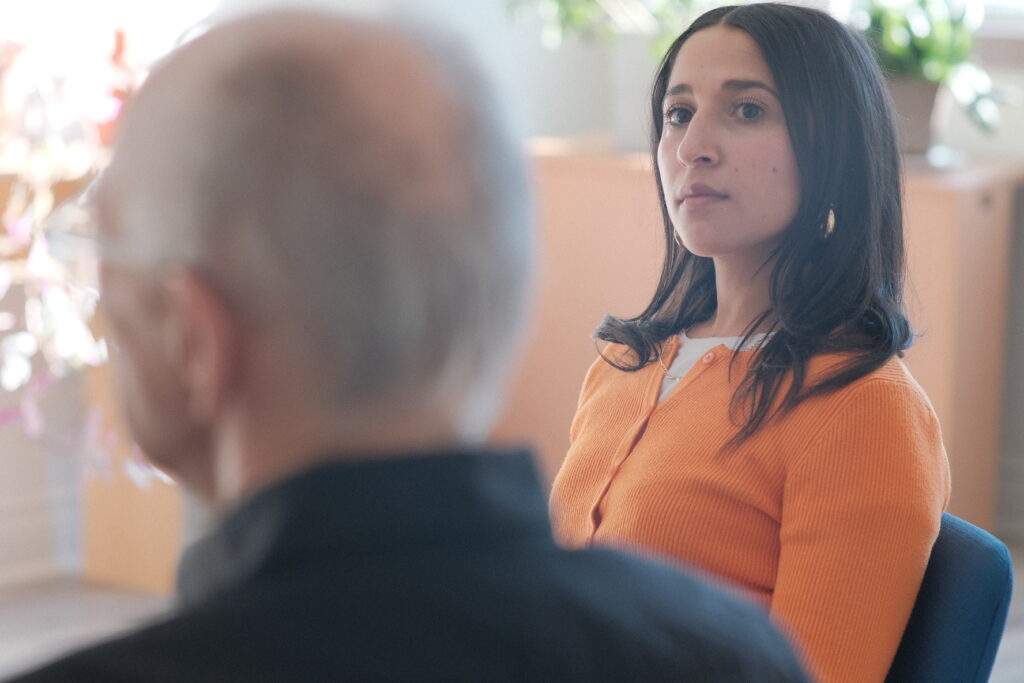
The trauma caused by all types of violence is not limited to the experiences related to the events themselves. Beyond the direct consequences, both victims and perpetrators are confronted with their families’ reactions.
One of the consequences that is rarely discussed is the breakdown of family ties, which proves to be among the most painful. Whether it takes the form of estrangement, silence, rejection, judgment, or a loss of trust, the consequences of violence often extend beyond the events themselves and leave lasting scars on relationships.
The CSJR offers a workshop on family rifts resulting from violence—whether or not it has been brought before the courts—whether committed or endured. Participants will explore their wounds, their consequences, and how to envision a path toward healing and inner peace, regardless of the direction they choose.
The non-protective mothers workshop

The trauma caused by sexual abuse is not limited to the events themselves. Beyond the direct consequences, negative and unsupportive reactions from the victims’ loved ones can leave scars that are just as deep.
Some victims live with the pain of not having been supported and protected by their mothers, who turned a blind eye, denied what was happening, did not believe their child, failed to intervene, blamed the victim, or downplayed the situation.
The CSJR is offering a workshop on maternal failure to protect in the context of sexual abuse during childhood or adolescence. This taboo—yet deeply painful—subject is experienced by some as yet another form of abuse.
Participants will explore their wounds, the consequences of this failure to protect, and how to find a path toward healing and inner peace.
What are the potential benefits of these workshops?
- Being able to express oneself and be heard about one’s experiences, in a completely open environment
- Expressing one’s emotions: shame, anger, guilt, sadness, etc.
- Gaining a better understanding of the profound consequences of violence
- Reflecting on and discussing taboo or often unanswered questions
- Reexamining one’s experiences from a broader perspective
- Taking responsibility for moving forward
- Reducing feelings of isolation through dialogue with people who have experienced similar trauma
- Helping to drive change in the lives of other participants through one’s words and reflections
- Foster a sense of shared humanity and hope for the alleviation of suffering
Upcoming Workshops
We offer these workshops annually; contact us to learn more:
Chantal Lachance, facilitator and trainer: chantallachance@csjr.org / 514-933-3737 ext. 3.